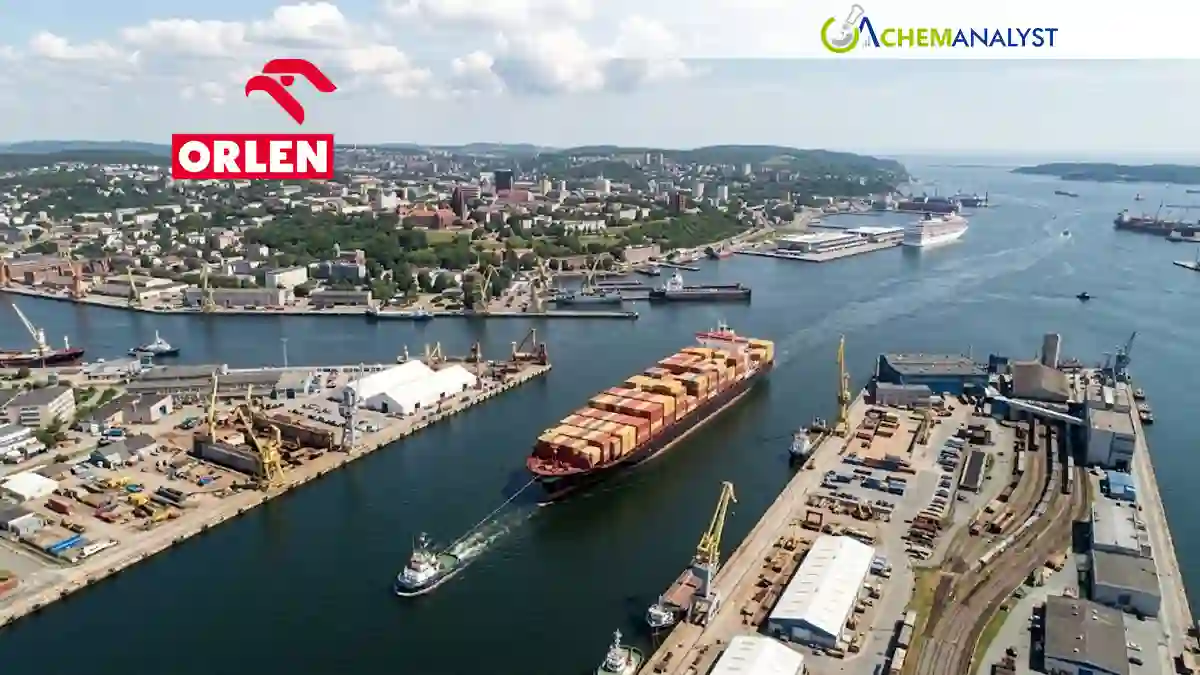
ORLEN and the Port of Gdynia Authority have signed an agreement to investigate opportunities for expanding LNG and bioLNG as marine fuels in Poland. The partnership aims to determine market demand for alternative marine fuels and assess the infrastructure, operational requirements, and regulatory conditions needed to establish bunkering services along the Polish coast.
A major focus will be the feasibility of waterside LNG and bioLNG bunkering. This includes ship-to-ship fuel transfers, in which bunker vessels supply fuel directly to ships operating in or calling at the port. The companies will evaluate whether these solutions can efficiently serve larger vessels while maintaining safety, smooth port operations, berth availability, and uninterrupted cargo handling.
The cooperation forms part of ORLEN’s broader strategy to transform its fuel portfolio through 2035. The company views natural gas and LNG as important transitional fuels that can contribute to energy security while supporting lower-emission transport. At the same time, ORLEN is strengthening its capabilities in renewable fuels such as bioLNG, which could become increasingly important for reducing emissions in heavy-duty road and maritime transportation.
According to ORLEN, the company intends to develop capabilities across the LNG and bioLNG value chain, covering supply, logistics, infrastructure, and end-use applications. Its collaboration with Gdynia is designed not only to support fuel supply but also to help establish the infrastructure and market conditions necessary for alternative marine fuels to expand across Poland and the wider region.
The Port of Gdynia considers the initiative part of its preparations for the shipping industry’s ongoing energy transition. As shipowners seek lower-emission fuel options, ports must increasingly accommodate vessels powered by different technologies and fuels. The partnership will therefore examine the requirements of ferry, container, and ro-ro operators, along with potential bunkering models already being used at other European ports.
The initiative comes as maritime regulations become increasingly stringent. The FuelEU Maritime framework, which entered into force in 2025, is progressively reducing the greenhouse-gas intensity of energy used by ships. This is encouraging shipowners and ports to consider several alternative fuels, including LNG, bioLNG, methanol, ammonia, and hydrogen.
For ORLEN, the agreement represents a long-term effort to strengthen its role in Poland’s alternative marine-fuel ecosystem. By developing LNG and bioLNG capabilities, the company aims to respond to evolving customer requirements while supporting the gradual decarbonization of maritime transport and logistics.
Product Impact
The move could strengthen the outlook for LNG and bioLNG in Poland’s maritime sector by creating additional bunkering infrastructure and encouraging shipowners to adopt lower-emission fuels. Demand for LNG could rise as shipping operators seek transitional solutions under tightening emissions regulations, while bioLNG could gain longer-term traction because of its renewable credentials. For commodities tracked by ChemAnalyst, stronger LNG demand may support natural gas and LNG prices, particularly in regional European markets, although the immediate impact should remain limited because the project is still at the assessment stage. Higher bioLNG demand could also improve the value outlook for biomethane and related feedstocks, while competing marine fuels such as methanol and ammonia could face greater demand pressure.








 About ChemAnalyst
Leave a Comment
Comments (0)