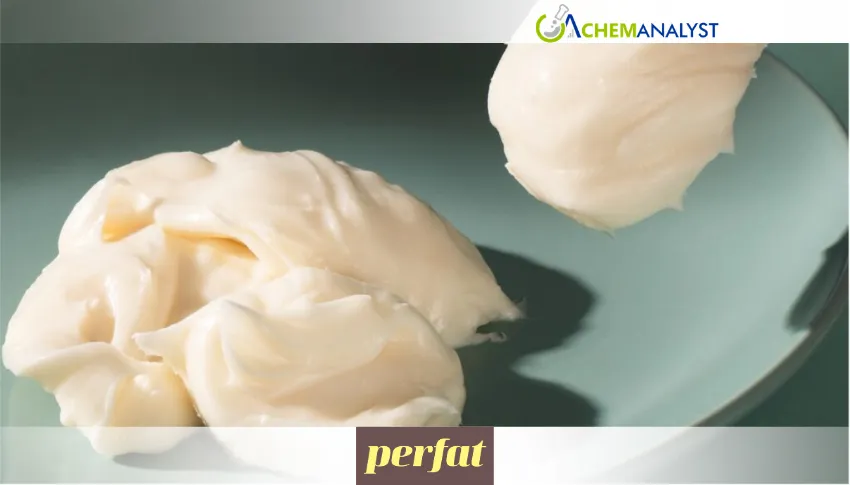
Finnish food technology startup Perfat Technologies has unveiled Perfat Soft, a new sunflower-oil-based solid fat alternative designed to replace conventional fats such as butter, palm oil, and coconut oil across a wide variety of food applications. Developed using the company's proprietary oleogel technology, the innovation aims to provide food manufacturers with a healthier, lower-saturated-fat ingredient while maintaining the texture, stability, and functionality expected from traditional solid fats.
Headquartered in Helsinki, Perfat Technologies is entering the rapidly expanding alternative fats market with what it describes as its first commercial innovation. The company’s oleogelation process transforms liquid vegetable oils into semi-solid, gel-like structures without relying on high levels of saturated fats. Unlike conventional fat alternatives, Perfat Soft also incorporates dietary fibre into its formulation, creating a product that delivers both functional and nutritional advantages.
According to Perfat co-founder and Chief Executive Officer Jyrki Lee-Korhonen, the primary ingredient in Perfat Soft is high-oleic sunflower oil. The formulation also includes soluble corn fibre, mono- and diglycerides of fatty acids, along with natural antioxidants. Together, these ingredients create a stable solid fat capable of replacing traditional fats in numerous food products while significantly reducing saturated fat content.
The launch follows the company's successful €2.5 million Series A funding round completed last year, which enabled Perfat Technologies to scale manufacturing capabilities and accelerate commercialization. Established in 2023 by Jyrki Lee-Korhonen and Chief Technology Officer Fabio Valoppi, the startup has focused on leveraging material physics and food science to overcome long-standing challenges associated with commercial oleogel production.
Oleogels have long been regarded by food scientists as one of the most promising alternatives to saturated fats. By combining liquid oils with specialized structuring agents, oleogels mimic the physical properties of solid fats without carrying the same health concerns linked to excessive saturated fat consumption. However, commercial adoption has been limited due to the scarcity of food-grade gelators and regulatory constraints governing their use.
Perfat Technologies claims to have addressed these barriers through its proprietary production process. Instead of relying solely on conventional gelators, the company uses dietary fibre as a co-structuring component, enabling healthy vegetable oils to form stable solid fat structures suitable for industrial food production. The technology can reportedly be adapted to different vegetable oils while preserving desirable texture and processing characteristics.
One of Perfat Soft's defining features is its exceptionally high fibre content. The product contains approximately 34 grams of dietary fibre per 100 grams, whereas conventional fats generally contain no fibre at all. This nutritional advantage aligns with growing consumer interest in increasing fibre intake, particularly as awareness of digestive health and overall wellness continues to expand. Fibre has also gained renewed attention because of dietary trends encouraging higher fibre consumption and growing interest in metabolic health.
In addition to increasing fibre intake, Perfat Soft offers meaningful calorie reductions. The product contains approximately 616 calories per 100 grams, representing around 14% fewer calories than butter and roughly 30% fewer than palm oil. Because the product is not composed entirely of oil or fat, its overall energy density is considerably lower than that of conventional solid fats.
Perhaps its most significant health advantage lies in its fatty acid profile. Perfat Soft contains no trans fats and only 11.7 grams of saturated fat per 100 grams, representing a reduction of more than 75% compared with butter and palm oil. Since saturated and trans fats are widely recognized as contributors to elevated LDL cholesterol levels and cardiovascular disease risk, reducing their presence in processed foods remains a major objective for many food manufacturers and public health initiatives.
The ingredient has been developed for broad commercial use across multiple food categories. Bakery products—including cakes, cookies, biscuits, cereal bars, and sweet fillings—represent the company's initial target market. However, the fat alternative is also suitable for confectionery products such as chocolate spreads, plant-based dairy products, and meat alternatives.
Within dairy alternatives, Perfat Soft can provide creaminess and structural stability in products such as ice cream while significantly lowering saturated fat content. Company data indicate that formulations using the ingredient can achieve approximately a 71% reduction in saturated fat compared with conventional dairy cream. In plant-based meat products, the ingredient contributes desirable juiciness, texture, mouthfeel, and product structure, helping manufacturers replicate the eating experience associated with animal fats.
Lee-Korhonen noted that the first commercial version of Perfat Soft is primarily intended for bakery manufacturers, although the company is already collaborating with several food businesses on product development initiatives. While customer names have not yet been disclosed, commercialization efforts are reportedly progressing.
Beyond nutrition and functionality, sustainability represents another key selling point. Perfat Technologies estimates that Perfat Soft generates only about 1.7 kilograms of carbon dioxide equivalent emissions per kilogram of product. This footprint is approximately 83% lower than dairy butter and around 77% lower than palm oil, highlighting its potential environmental advantages for food manufacturers seeking to reduce emissions across their supply chains.
An additional commercial benefit is that Perfat Soft does not fall under Europe's novel food regulations, eliminating the need for lengthy regulatory approval before market introduction. The company expects the first consumer food products containing Perfat Soft to reach the market either in late 2026 or early 2027.
To date, Perfat Technologies has secured approximately €7 million in funding, with most financing obtained through equity investments. The company has also benefited from support provided by the EU-backed EIT Food accelerator and participated in the RisingFoodStars programme. Manufacturing has been fully outsourced, enabling annual production capacity exceeding one thousand metric tonnes.
Perfat Technologies joins a growing group of innovators pursuing healthier fat alternatives. Companies such as Shiru have introduced oleogel-based fat systems combining plant proteins with unsaturated oils, while Time-Travelling Milkman has developed a sunflower-seed-based dairy fat substitute using naturally occurring oleosomes. Together, these developments reflect increasing industry momentum toward healthier, more sustainable fat ingredients capable of replacing conventional animal and tropical fats in modern food production.
Impact of Perfat Soft & Effect on ChemAnalyst-Tracked Commodities
Product Impact: Perfat Soft's launch adds a credible, scalable saturated fat alternative targeting bakery, confectionery, and plant-based categories. With first consumer products expected in late 2026–early 2027, its near-term market impact will be limited but directionally significant as food manufacturers begin co-development trials.
Commodity Price Impact:
Sunflower Oil — The primary feedstock. Increased industrial demand from oleogel production will add modest upward pressure. Sunflower oil is already trading at USD 12,800/MT in the US (March 2026), with supply already tightened by reduced Black Sea exports and competition from biodiesel sectors. Perfat scaling up could further firm prices.
Palm Oil — Faces mild long-term substitution risk. Palm oil is currently priced around USD 1,200–1,290/MT, but widespread adoption of alternatives like Perfat Soft could gradually soften demand, particularly in Europe where deforestation regulations already pressure palm sourcing.
Palm Kernel Oil — Similar substitution risk as palm oil. Prices are already elevated at ~USD 2,067/MT in the US, and any demand erosion from oleogel adoption would add downward pressure over the medium term.
Overall, near-term price impact is minimal, but the trend supports sunflower oil demand growth and gradual headwinds for palm-derived commodities.







Leave a Comment
Comments (0)