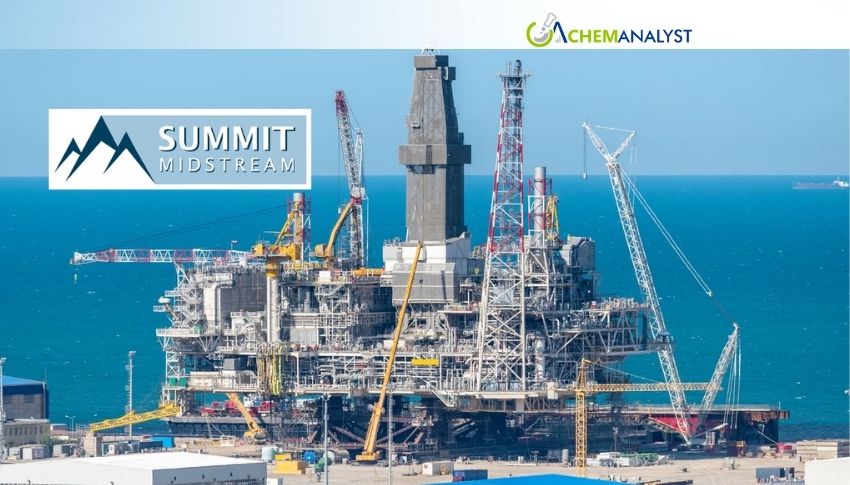
US-based energy infrastructure company Summit Midstream has taken a major step toward expanding natural gas transportation capacity from the Delaware Basin after making a Final Investment Decision (FID) for the Double E Pipeline mainline compression expansion.
The company announced that the pipeline’s open season has concluded with strong shipper interest, supporting the decision to move forward with the project. The expansion is backed by a new long-term firm transportation agreement with an investment-grade shipper, providing additional commercial support for the planned infrastructure.
The Double E Pipeline is a 135-mile Federal Energy Regulatory Commission (FERC)-regulated interstate natural gas transmission system. It transports natural gas from the Delaware Basin to multiple delivery points near the Waha Hub in Texas. The pipeline began commercial operations in November 2021, with Summit Midstream Permian II, a subsidiary of Summit Midstream, serving as its operator.
The planned expansion will involve the installation of a bi-directional mainline compressor station on the Double E system. Once completed, the additional compression is expected to increase forward-haul transportation capacity toward the Waha Hub by approximately 900 million cubic feet per day (MMcf/d). The project is targeted for commissioning in the fourth quarter of 2028.
With the expansion, contracted firm capacity on the Double E Pipeline is expected to reach approximately 2.2 billion cubic feet per day. The latest long-term take-or-pay agreement covers 200 MMcf/d of transportation capacity. Meanwhile, total binding long-term commitments secured through the open season have increased to approximately 550 MMcf/d.
Summit Midstream Chairman, President and CEO Heath Deneke described the development as an important milestone for both Summit and Double E. He highlighted the pipeline’s growing importance to producers and processors operating in the Delaware Basin, while noting its access to several downstream markets.
The expansion, along with new plant connections and associated infrastructure, is expected to require approximately $100 million of investment. Summit Midstream will finance 70% of the project cost, reflecting its ownership interest, while an ExxonMobil subsidiary will fund the remaining 30%.
The project remains subject to approval from FERC and other relevant regulatory authorities. The joint venture has already secured orders for the required gas-turbine compression equipment to support the anticipated 2028 service date.
To support its capital requirements, Summit Permian Transmission converted a $50 million uncommitted accordion under its existing $440 million senior secured term facility into a committed facility. This increases total committed financing capacity to $100 million. The facility matures in March 2031 and remains non-recourse to Summit Midstream.
Product & Chemical Commodity Price Impact
The expansion is primarily positive for natural gas, as an additional 900 MMcf/d of transportation capacity should improve connectivity between Delaware Basin producers and the Waha Hub. Greater takeaway capacity could reduce regional pipeline constraints and lessen the risk of severe Waha discounts during periods of strong production. For chemical commodities tracked by ChemAnalyst, the impact is moderately supportive for methanol, ammonia, hydrogen and other gas-intensive products, because improved gas evacuation can stabilize feedstock availability and reduce regional supply bottlenecks. However, the project will not materially change chemical prices immediately because commercial operations are not expected until Q4 2028.








 About ChemAnalyst
Leave a Comment
Comments (0)