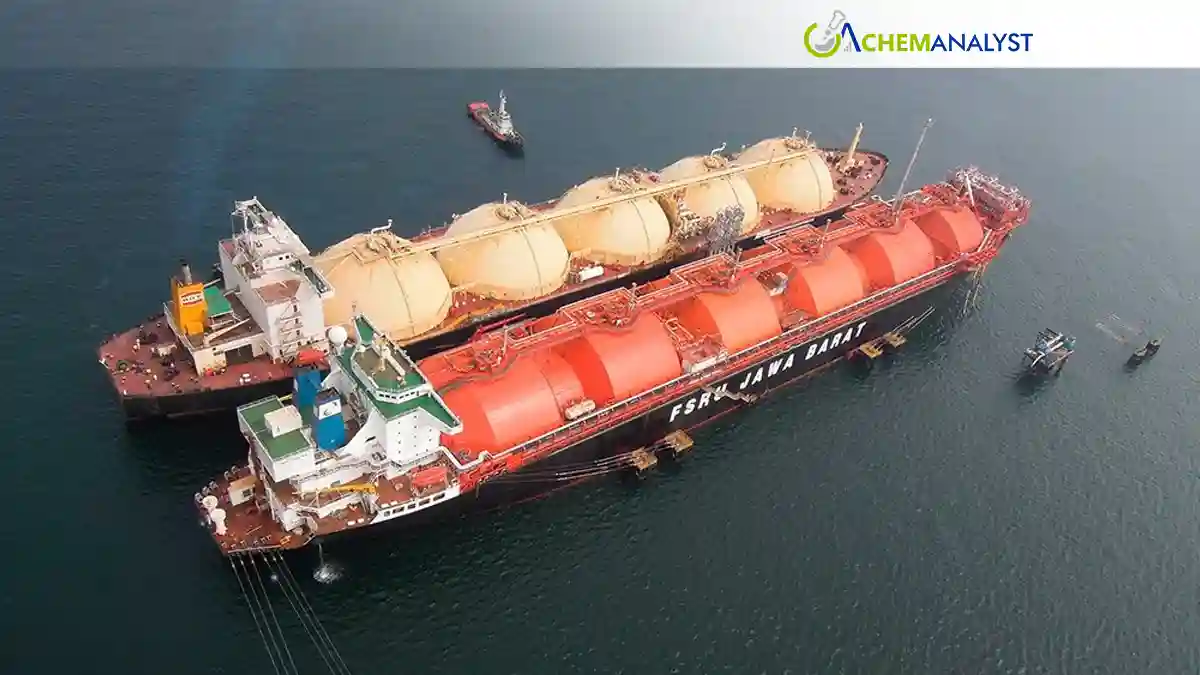
US liquefied natural gas (LNG) exports are undergoing a significant redirection, shifting away from Europe towards Asian and African markets. This marks the first time since July 2024 that Europe has not received the majority of monthly US LNG exports. The change is primarily driven by higher spot prices in Asia and increased demand from emerging African buyers.
In June 2026, less than half of US LNG exports, specifically 4.41 million metric tons (MT) or under 42% of the total, went to Europe. This represents a decrease from May 2026, when Europe received 5.13 MT, accounting for over 50% of US LNG exports. This decline is attributed to muted demand in Europe. European gas storage levels were about 40% full as of May 31, 2026, which, while below previous years, reduced immediate import needs. Additionally, European buyers are reportedly delaying purchases, anticipating potential price reductions later in the year.
Conversely, shipments to Asia totaled 3.25 MT, comprising approximately 31% of US LNG exports in June 2026. This volume, while slightly below May levels, remains significantly higher than earlier in 2026. Egypt emerged as a major buyer, importing a record 1.06 MT of US LNG in June, accounting for nearly 10% of total exports. Other African nations, including South Africa and Senegal, also received US LNG cargoes. Overall US LNG exports rose slightly to 10.6 MT in June 2026.
The primary cause for this shift is the substantial price difference between Asian and European spot markets. In June, the Asian benchmark JKM averaged $17.33 per million British thermal units (mmBtu), while Europe's TTF benchmark averaged $13.19 per mmBtu. This significant premium in Asia creates lucrative arbitrage opportunities, encouraging traders to reroute cargoes eastward to maximize profits. Egyptian buyers also paid premiums of up to $1 per mmBtu over TTF-linked prices.
Geopolitical tensions in the Middle East have also contributed to the surge in Asian demand. The conflict has caused supply disruptions, including the effective closure of the Strait of Hormuz, which normally handles about 20% of global LNG volumes. This has tightened Asian supply and driven up prices, making the region more attractive for US exporters.
The redirection of US LNG raises concerns about Europe's long-term energy security. While Europe has diversified away from Russian pipeline gas, it risks becoming overly dependent on US LNG. Projections suggest the US could supply up to 80% of EU LNG imports by 2030. This reliance exposes Europe to potential price leverage and future supply disruptions, highlighting the need for continued investment in domestic renewable energy production and demand reduction measures.
This market shift underscores the dynamic and interconnected nature of the global LNG trade. The ability of US LNG cargoes to be redirected based on price signals demonstrates the flexibility of the market, but also its vulnerability to regional supply and demand imbalances. The US remains the world's largest LNG exporter, with significant expansion in export capacity planned for 2026 and 2027. This growing capacity will continue to influence global gas prices and supply routes.
ChemAnalyst Price Impact: The diversion of US LNG cargoes from Europe to Asia is likely to create mixed pricing trends across chemical commodities tracked by ChemAnalyst. Higher LNG and natural gas prices in Asia may increase production costs for ammonia, urea, methanol, hydrogen, and other gas-based petrochemicals, supporting a firmer price outlook in the region. Asian methanol and ammonia producers could face tighter margins, while fertilizer prices may remain elevated due to costlier feedstock. In Europe, relatively improved LNG availability could moderate natural gas prices compared with Asian benchmarks, potentially easing cost pressure on European chemical producers. However, ongoing geopolitical risks in the Middle East and disruptions around the Strait of Hormuz may keep global energy markets volatile. Overall, ChemAnalyst-tracked commodities with high natural-gas dependency—including ammonia, urea, methanol, and hydrogen-related products—are expected to witness bullish-to-firm pricing in Asia and a stable-to-slightly softer trend in Europe over the near term.







 About ChemAnalyst
Leave a Comment
Comments (0)