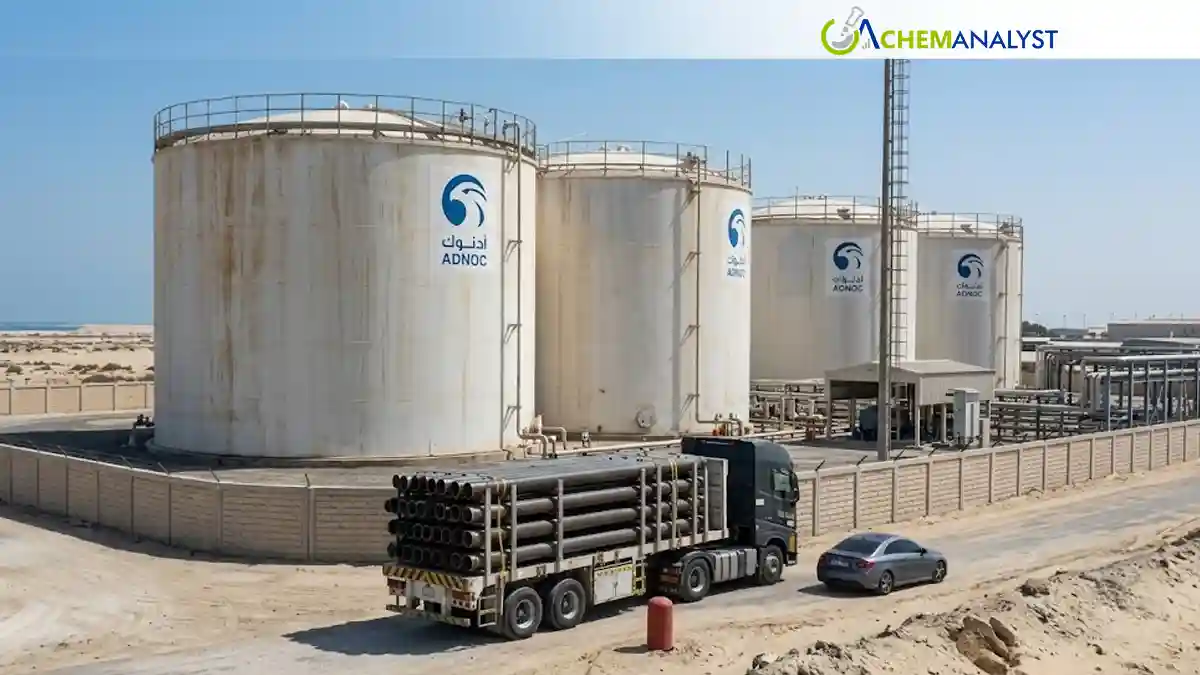
ADNOC Gas reported a sharp decline in second-quarter profitability as disruptions in the Strait of Hormuz affected sales and regional energy flows. The Abu Dhabi-based natural gas company posted net income of $665 million for the quarter, down 52% from $1.39 billion recorded during the same period last year. Despite the steep decline, earnings exceeded the company’s guidance range of $400 million to $600 million.
The company’s performance was affected by the closure and disruption of shipping routes through the Strait of Hormuz following escalating military tensions involving Iran, the United States and Israel. The strategic waterway is a critical route for global energy trade, handling roughly one-fifth of the world’s oil and liquefied natural gas shipments.
Despite the external challenges, ADNOC Gas benefited from strong demand in its domestic market. Chief Financial Officer Peter van Driel said approximately $1 billion of the company’s $1.7 billion first-half net income came from local customers. He described domestic demand as the backbone of the company’s operational performance.
The wider regional conflict has created significant risks for Gulf energy producers. Iran has targeted energy infrastructure and oil tankers in the region, while disruptions around Hormuz have complicated international shipments. ADNOC, ADNOC Gas’ parent company, has also reported impacts from attacks on its personnel and assets. One of its tankers was reportedly attacked in the Strait on Saturday.
In response to the uncertain operating environment, ADNOC Gas is evaluating alternative options while closely monitoring developments around Hormuz. Chief Executive Officer Fatema Al Nuaimi said the company could not operate in the current environment without considering alternatives, although she did not provide further details.
For the third quarter, ADNOC Gas expects net income between $600 million and $800 million. The company maintained a full-year net income outlook of $3.5 billion to $4 billion, below its record $5.2 billion achieved in 2025.
Despite near-term pressures, ADNOC Gas continues to pursue long-term expansion. The company plans to invest approximately $28 billion between 2026 and 2030 to expand its oil and gas sales and strengthen production capacity.
During the quarter, ADNOC Gas awarded $8.2 billion in EPC contracts for the second and third phases of its Rich Gas Development project. The second phase will add a natural gas processing unit at Habshan, while the third phase will establish an NGL fractionation unit at Ruwais, supporting greater recovery of higher-value liquids for export.
Impact on Products and ChemAnalyst Chemical Commodities
The Hormuz disruption is likely to create short-term bullish pressure on natural gas, LNG, LPG, NGLs and other energy-linked chemical feedstocks by raising supply-chain risks, freight costs and insurance premiums. Reduced gas and NGL availability could increase production costs for petrochemicals such as ethylene, propylene, methanol and ammonia, particularly across the Middle East and Asian markets. However, ADNOC Gas’ strong domestic demand and continued investment may limit the longer-term supply impact. If shipping restrictions persist, chemical commodity prices could remain elevated due to tighter feedstock availability and higher transportation costs. Conversely, a rapid reopening of Hormuz would ease prices and restore trade flows.







Leave a Comment
Comments (0)