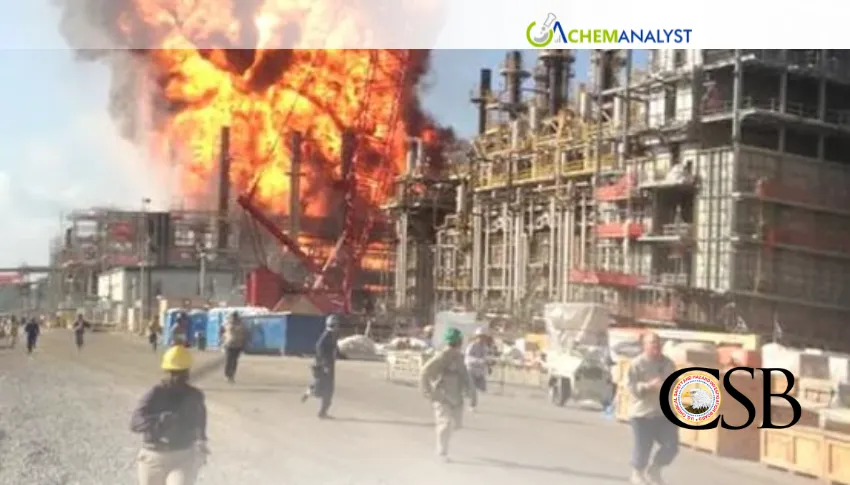
The U.S. Chemical Safety and Hazard Investigation Board (CSB) has released its final report on the fatal August 11, 2025, explosion at U.S. Steel’s Clairton Coke Works in Clairton, Pennsylvania. The incident involved the release and ignition of toxic, flammable coke oven gas, killing two workers, injuring 11 others, including five seriously, and causing approximately $52.5 million in property damage.
CSB Chairperson Steve Owens said the incident resulted from an informal work practice, inadequate facility siting, and an ineffective process safety management system. The agency concluded that the explosion could have been prevented.
Built in 1901, Clairton Coke Works is the largest coke manufacturing facility in the Western Hemisphere. The site currently operates six coke batteries containing 455 ovens. Coke production involves heating metallurgical coal to nearly 2,000°F for at least 18 hours. The process produces coke and coke oven gas, a highly flammable and toxic mixture containing hydrogen, methane, nitrogen, and carbon monoxide. After processing, part of this gas is reused as fuel for heating the coke ovens.
The August explosion occurred during maintenance on Battery 13’s coke oven gas isolation valve. U.S. Steel employees and contractors from MPW Industrial Services were attempting to exercise a cast iron double-disc gate valve by closing and reopening it. Residue frequently accumulated in the valve seat, making complete closure difficult.
Although U.S. Steel had no formal procedure authorizing water cleaning, employees had reportedly used pressurized water to remove residue from valves for at least three years. On the day of the accident, a supervisor instructed MPW workers to use a pump truck to apply pressurized water to the valve.
As the valve gates were closed or nearly closed, water became trapped between them. Pressure inside the valve increased beyond its containment capability, causing the more than 70-year-old cast iron valve to fail catastrophically. The failure released coke oven gas, which ignited within minutes and triggered a major explosion.
The valve had been manufactured in 1953 and refurbished in 2013. CSB noted that cast iron is brittle and is widely cautioned against for certain hazardous applications involving flammable substances.
The explosion occurred in a transfer area between Batteries 13 and 14. Several occupied buildings stood less than 20 feet above the coke oven gas piping and were not designed to withstand explosions. These structures suffered catastrophic damage, contributing significantly to the severity of injuries and fatalities.
The CSB identified three major safety issues: inadequate procedures and hazard analysis, unsafe facility siting, and weaknesses in process safety management. The agency recommended that U.S. Steel evaluate the location of occupied buildings, develop formal procedures for pressurized-water valve cleaning, and strengthen process safety management for coke oven gas operations.
Recommendations were also issued to Nippon Steel North America (NSNA) and MPW. NSNA was urged to establish stronger corporate process safety governance and auditing, while MPW was advised to create written procedures for cleaning systems containing flammable or toxic gases and ensure worker training.
The CSB emphasized that routine tasks involving hazardous materials must have clearly defined procedures, proper hazard assessments, and comprehensive worker training.
Impact on Product and Chemical Commodity Prices
The report is unlikely to create an immediate major price shock across chemical commodities, but it could increase operating and compliance costs across coke, steel, and industrial gas value chains. Stronger process safety requirements may require U.S. Steel and other coke producers to invest in upgraded valves, piping, monitoring systems, facility relocation, and maintenance procedures. This could marginally raise production costs for coke oven gas, metallurgical coke, and related downstream steel products. If safety upgrades cause temporary maintenance shutdowns or reduce coke output, regional supplies could tighten, supporting prices. Chemicals linked to coke-oven byproducts, including benzene, toluene, xylene, ammonia, sulfur, and tar, could also face limited upward price pressure if production disruptions occur.







Leave a Comment
Comments (0)