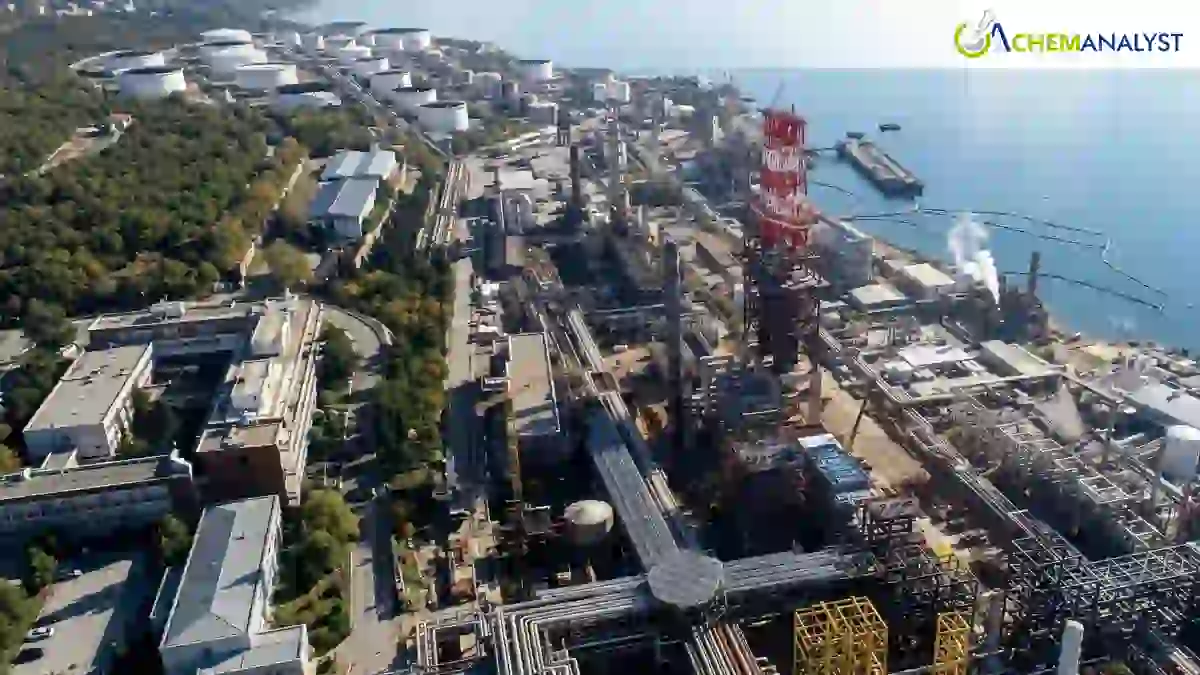
Croatian oil and gas company INA has successfully completed the modernization and upgrade of its Rijeka Refinery, marking the largest single investment in the company’s history. The project, valued at nearly €700 million, also stands among the most significant industrial developments undertaken in modern Croatia. The completion of this extensive upgrade represents a major milestone for the company and is expected to significantly enhance the refinery’s operational efficiency, production flexibility, and long-term competitiveness in the regional energy market.
A central component of the modernization project is the installation of a new Delayed Coking Unit along with several associated processing facilities. With these new additions, the refinery is now capable of processing up to four million tons of crude oil annually, including heavier and more complex crude grades. The technological improvements allow the facility to convert a larger share of crude oil into high-value petroleum products. As a result, production efficiency has increased considerably, enabling the refinery to generate more valuable output from the same volume of crude feedstock.
One of the key benefits of the upgrade is a substantial rise in diesel production. The company expects diesel output at the refinery to increase by approximately 30 percent. Additionally, the facility will no longer require imports of vacuum gas oil (VGO), a feedstock that had previously been sourced largely from Russian suppliers. Eliminating this dependency is expected to improve supply chain resilience while strengthening the refinery’s energy security and independence.
The construction phase of the project was equally impressive in scale. Building the new processing units required more than 10,000 tons of steel—an amount comparable to nearly one and a half times the structure of the Eiffel Tower. In addition, around 60,000 cubic meters of concrete were used, enough material to construct a medium-sized football stadium. These figures illustrate the magnitude of the infrastructure development undertaken at the refinery site.
The official completion ceremony was attended by high-level representatives from the governments of Croatia and Hungary, as well as ambassadors, local community representatives, and senior management from INA and its parent company MOL Group. Their presence highlighted the strategic significance of the project not only for INA but also for the wider regional energy landscape.
In parallel with the refinery upgrade, INA has also launched plans to develop a green hydrogen production facility at the Rijeka site. Prior to the ceremony, a grant agreement worth €15 million was signed under Croatia’s National Recovery and Resilience Plan to support the initiative. The company intends to invest more than €60 million in the project, which will include the installation of a 10-megawatt electrolyser and an 11-megawatt solar power plant.
The hydrogen produced at the facility will serve both the refinery’s operations and the transportation sector. Construction is expected to be completed by the end of 2026, with hydrogen production scheduled to begin in 2027. According to Zsuzsanna Ortutay, the upgraded refinery will allow INA to utilize each barrel of crude oil more efficiently while remaining competitive for years to come. She also emphasized that the modernization supports the company’s broader transition toward lower-carbon energy solutions.
Croatia’s Minister of Economy, Ante Šušnjar, noted that robust energy infrastructure is essential during periods of geopolitical uncertainty. He highlighted that the improved refinery will help ensure a stable energy supply and contribute positively to the country’s economic development.
Meanwhile, Levente Magyar stressed the regional importance of the project, describing it as a significant step toward strengthening energy security and sovereignty for both Croatia and Hungary.








 About ChemAnalyst
Leave a Comment
Comments (0)