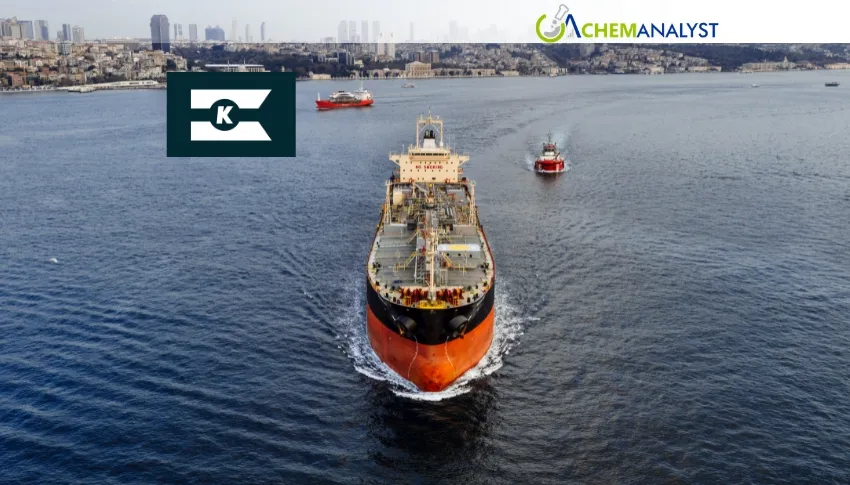
Klaveness Combination Carriers (KCC) achieved its second-quarter guidance for 2026, driven by strong earnings from its fleet despite operational disruptions in the Middle East. The company's performance was influenced by a vessel's exit from the Strait of Hormuz, highlighting the ongoing geopolitical risks affecting global shipping.
KCC reported preliminary second-quarter 2026 fleet average time charter equivalent (TCE) earnings of $37,782 per day, which fell within its guidance range and marked an increase from the first quarter. The CABU fleet specifically saw TCE earnings of $34,076 per day, also within guidance and $4,524 per day higher than in the first quarter. This improvement was largely due to stronger markets and increased wet trading activity. The CLEANBU fleet also delivered strong results, with TCE earnings of $42,243 per day, aligning with guidance and nearly $5,000 per day above the first quarter, reflecting a robust and volatile LR1 product tanker market.
Operational efficiency faced challenges from Middle East disruptions impacting caustic soda supply, leading to longer ballast legs and increased waiting times. However, a higher number of on-hire days and an expected $5.3 million in loss-of-hire compensation, linked to the Banastar’s Middle East Gulf exit and an extended dry docking, partially offset these operational setbacks.
The article highlights the heightened risks in the Strait of Hormuz, a critical chokepoint for global oil and gas shipments. The US Navy-led Joint Maritime Information Center (JMIC) raised the threat level for transiting the strait to "severe" following recent attacks on commercial vessels. This marks the first time since mid-June that the strait received this classification.
The increased threat level has led to a significant reduction in commercial shipping traffic through the strait. Marine tracking firms reported a sharp decline, with vessel movements falling well below recent levels after a fragile ceasefire between the United States and Iran collapsed. Some shipowners are now reluctant to transit the waterway due to missile attacks, drone threats, and surging war-risk insurance premiums.
The ongoing disruptions in the Strait of Hormuz have broad economic and industry-specific consequences. War-risk insurance rates have soared, with some industry sources indicating rates moving towards approximately three percent of a vessel's value, a substantial increase. This makes transiting the region significantly more expensive and encourages shipowners to delay or divert voyages.
The vulnerability of critical maritime chokepoints to geopolitical tensions can transmit shocks across global supply chains and commodity markets. Higher energy, fertilizer, and transport costs, including freight rates and bunker fuel prices, may increase overall food costs and intensify cost-of-living pressures globally. The situation underscores the need for de-escalation and safeguarding maritime transport to ensure secure trade corridors.
Impact on Products and ChemAnalyst-Tracked Chemical Commodities
The continued security risks and shipping disruptions in the Strait of Hormuz are expected to exert upward pressure on several chemical commodities tracked by ChemAnalyst. The region is a major export hub for petrochemicals, fertilizers, caustic soda, methanol, ammonia, sulfur, and base chemicals. Higher war-risk insurance premiums, extended voyage durations, and vessel diversions will increase freight costs, raising delivered prices across Asia, Europe, and other import-dependent markets. Caustic soda exports from the Middle East may face tighter availability due to logistical delays, while ammonia, methanol, sulfur, and fertilizer shipments could also experience supply constraints, supporting bullish price trends. Petrochemical feedstocks such as naphtha and LPG may become costlier if crude oil prices strengthen amid geopolitical tensions, increasing production costs for downstream chemicals including ethylene, propylene, polyethylene, polypropylene, PVC, and solvents. Overall, sustained instability in the Strait of Hormuz is likely to keep freight rates elevated and support firmer pricing across multiple ChemAnalyst-tracked chemical commodities in the near term.








 About ChemAnalyst
Leave a Comment
Comments (0)