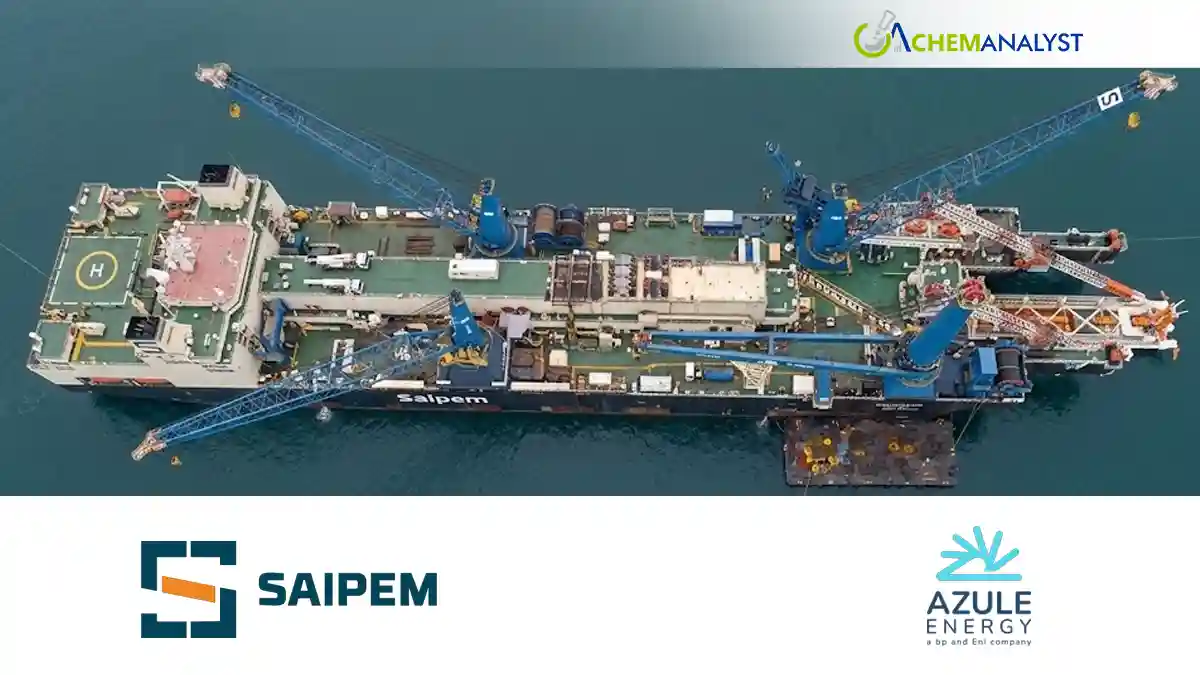
Saipem has been awarded a major offshore engineering, procurement, construction, and installation (EPCI) contract valued at approximately $1 billion by Azule Energy Exploration (Angola) Limited and Azule Energy Angola B.V. The contract is associated with the Greater PAJ Project, a large-scale ultra-deepwater oil and gas development located roughly 200 kilometers off the coast of Angola. The award further strengthens Saipem’s position as a leading global contractor in complex offshore energy projects and highlights continued investment in Angola’s offshore hydrocarbon sector.
The project is expected to run for approximately 40 months and involves a comprehensive scope of subsea engineering, fabrication, transportation, and installation activities. The development will take place in water depths reaching up to 2,000 meters, reflecting the technical complexity of the project and the advanced engineering capabilities required for execution. Through this contract, Saipem will play a key role in establishing the subsea infrastructure necessary for the production and transportation of hydrocarbons from the Greater PAJ field.
Under the agreement, Saipem will be responsible for the engineering, fabrication, transportation, and installation of extensive subsea systems. The company’s scope includes the deployment of around 180 kilometers of rigid pipelines that will form the backbone of the offshore transportation network. In addition, Saipem will install various subsea facilities designed to support field operations and ensure efficient production flow.
The contract also encompasses the transportation and installation of approximately 38 kilometers of flexible flowlines and jumpers. These components are critical in connecting subsea wells to production facilities while accommodating movement and operational flexibility in deepwater environments. Furthermore, Saipem will install around 54 kilometers of umbilicals, which provide power, control, and communication links between surface facilities and subsea equipment, enabling safe and efficient field management.
A significant aspect of the project is its emphasis on local content development in Angola. Fabrication activities will be carried out at Saipem’s Ambriz fabrication yard, located within the country. The company plans to engage local suppliers, contractors, and workforce resources throughout the execution phase. This approach aligns with Angola’s broader objectives of promoting industrial development, creating employment opportunities, and enhancing technical expertise within the domestic energy sector.
For offshore construction activities, Saipem intends to deploy some of its flagship vessels, including the FDS and Castorone. These highly specialized construction vessels are designed to execute complex subsea installation operations in deep and ultra-deepwater environments. Their involvement is expected to ensure efficient project delivery while maintaining high standards of operational safety and technical performance.
Saipem, headquartered in Italy, is recognized globally for its expertise in offshore and onshore energy infrastructure projects. The company operates across several business segments, including offshore engineering and construction, drilling services, energy transportation systems, offshore wind developments, and sustainable infrastructure solutions. Its extensive asset portfolio includes five fabrication yards, 17 owned offshore construction vessels, and 12 drilling rigs, of which nine are directly owned by the company.
The contract award also reflects the strategic ambitions of Azule Energy, one of Angola’s leading energy operators. Azule Energy is a joint venture established by global energy giants Eni and bp and serves as a key player in Angola’s upstream oil and gas industry. Through its operating subsidiaries, including Azule Energy Exploration (Angola) Limited and Azule Energy Angola B.V., the company continues to invest in expanding production capacity and developing offshore resources.
The Greater PAJ project represents another significant milestone for Angola’s offshore energy industry. By combining advanced subsea technology, deepwater engineering expertise, and local participation, the development is expected to contribute to the country’s long-term energy production goals while generating economic benefits for local communities and businesses.
Market Impact: The award of Saipem’s $1 billion offshore contract for the Greater PAJ project is primarily a positive indicator for the upstream oil and gas sector rather than an immediate driver of chemical market movements. The development will support future crude oil and natural gas production from Angola’s offshore reserves, strengthening long-term hydrocarbon supply prospects. During the construction phase, demand for steel pipes, flexible flowlines, coatings, insulation materials, engineering polymers, and specialty chemicals used in subsea infrastructure is expected to increase.
For chemical commodities tracked by ChemAnalyst, the short-term price impact is likely to be limited because the project mainly involves infrastructure installation and will take several years to reach full production. However, the project could support marginal demand growth for petrochemical feedstocks and industrial chemicals used in offshore construction, including epoxy resins, polyurethane systems, protective coatings, lubricants, methanol, and specialty solvents.
In the medium to long term, once production comes online, increased crude oil and associated gas availability could contribute to improved feedstock supply for global petrochemical chains. This may exert slight downward pressure on upstream feedstocks such as crude oil, naphtha, and natural gas-derived products if accompanied by broader production growth from other regions. Consequently, commodities such as ethylene, propylene, polyethylene (PE), polypropylene (PP), and other petrochemical derivatives may experience improved supply fundamentals. Nevertheless, the overall impact on chemical prices is expected to remain gradual and moderate rather than immediate or significant.







Leave a Comment
Comments (0)