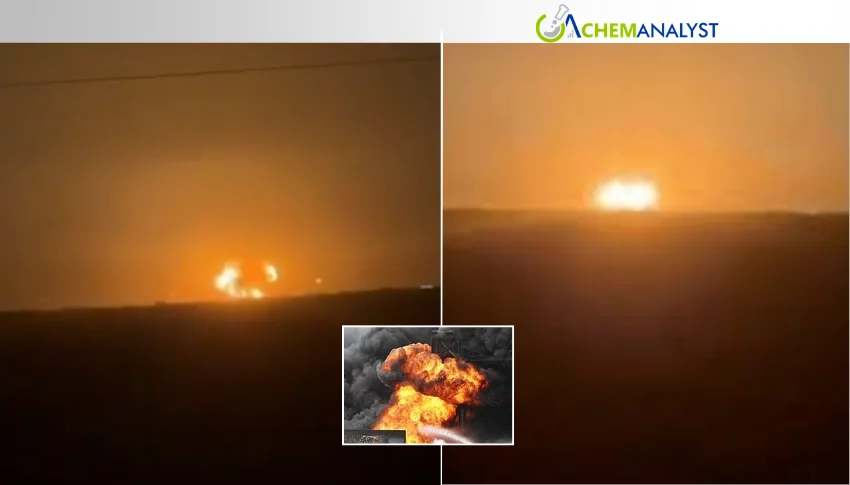
A powerful explosion struck Qatar’s key natural gas export infrastructure on Sunday night, leaving at least 54 individuals injured and raising fresh concerns about the stability of global energy supplies. The incident occurred at the Ras Laffan Industrial City, one of the world’s largest liquefied natural gas (LNG) hubs, while workers were engaged in efforts to restore operations that had been disrupted due to recent regional conflicts.
The blast resulted in a massive fire that engulfed parts of the facility, causing significant damage and prompting emergency response teams to rush to the site. Authorities confirmed that dozens of workers suffered injuries, while 18 individuals remained unaccounted for several hours after the explosion, intensifying concerns about the final casualty toll. Rescue and recovery operations continued throughout the night as emergency personnel worked to contain the fire and search for those missing.
The explosion comes at a sensitive time for Qatar’s energy sector, which had recently faced operational challenges following Iranian military strikes linked to the broader regional conflict. The attacks had disrupted shipping routes through the Strait of Hormuz, a strategically important passage for global oil and gas transportation, forcing Qatar to temporarily halt production and delay natural gas exports to international markets.
Following signs of de-escalation in regional tensions and ongoing diplomatic discussions aimed at securing a durable ceasefire, Qatar initiated the process of restarting its gas export facilities. According to QatarEnergy, the state-owned energy giant responsible for managing the country’s vast hydrocarbon resources, the explosion occurred during restoration and maintenance activities at the Barzan gas processing facility within the Ras Laffan complex.
Officials have not yet released a comprehensive assessment of the damage caused by the incident. Early reports had indicated a limited number of casualties; however, updated figures from Qatar’s Interior Ministry later revealed a much higher number of injuries, highlighting the seriousness of the accident. Investigators are currently examining the circumstances surrounding the explosion to determine its exact cause and evaluate the impact on the facility’s operational capabilities.
The Barzan gas processing facility plays a crucial role in Qatar’s domestic energy network, with the capacity to produce nearly 1.4 billion standard cubic feet of processed gas every day. This gas is primarily supplied for electricity generation and supports large-scale water desalination plants, both of which are essential for sustaining communities and industries across the Arabian Peninsula.
Qatar holds the dominant ownership stake in the Barzan project, reflecting its strategic importance to the nation’s energy security and economic development. American energy major ExxonMobil owns a minority interest in the facility. The company had not issued an immediate public statement regarding the explosion or its potential impact on operations.
The incident is likely to draw close attention from global energy markets, as any prolonged disruption at Qatar’s major gas facilities could influence LNG availability, supply chains, and price movements worldwide. Given Qatar’s position as one of the leading exporters of natural gas, developments at Ras Laffan will remain critical for both regional energy security and international commodity markets.
Impact: The explosion at Qatar’s Ras Laffan gas facility is expected to create short-term bullish pressure on several chemical commodities tracked by ChemAnalyst due to concerns over natural gas supply disruptions, rising energy costs, and potential constraints in Middle Eastern petrochemical exports. Natural gas-based chemicals such as methanol, ammonia, and urea are likely to witness the strongest impact, as higher LNG prices could increase production costs and tighten global supply. The incident may also influence hydrogen production economics, particularly grey hydrogen, which relies heavily on natural gas feedstocks. In the petrochemical segment, ethylene and propylene prices may receive upward support if disruptions affect gas processing and feedstock availability, subsequently impacting downstream polymers such as polyethylene (PE) and polypropylene (PP), especially in Asian markets dependent on Middle Eastern supplies. Energy-intensive products like caustic soda may also experience slight price increases due to elevated electricity costs. Although aromatics such as benzene, toluene, and xylene are less directly exposed to natural gas fluctuations, any rise in crude oil prices driven by regional tensions could provide additional support to their market values. Overall, the extent of the price impact will largely depend on the duration of the outage; a prolonged disruption could sustain higher prices, while a swift restoration may limit the impact to temporary market volatility.

Leave a Comment
Comments (0)