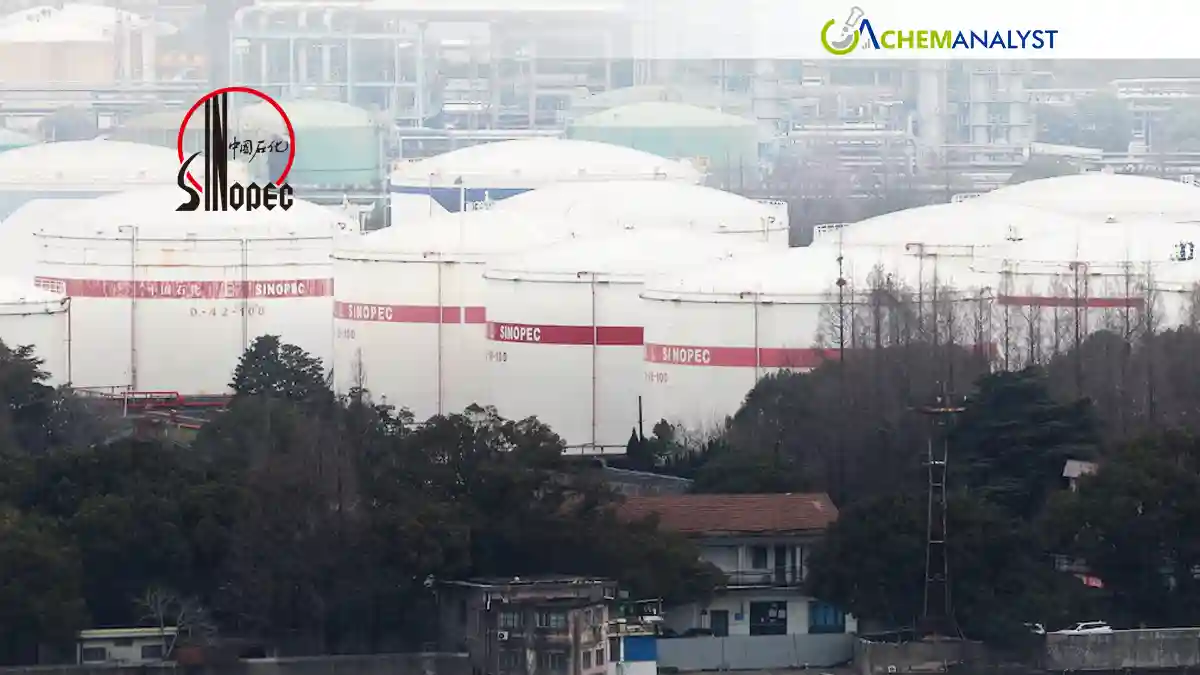
China’s state-owned Sinopec Corp, the world’s largest oil refiner by processing capacity, has significantly increased imports of Russian crude oil from the country’s Far East to offset reduced supplies from the Middle East following disruptions linked to the Iran conflict. According to multiple media reports, the company has expanded purchases of Russia’s Eastern Siberia-Pacific Ocean (ESPO) crude, taking advantage of its competitive pricing and reliable availability.
The shift comes as geopolitical tensions in the Middle East disrupted traditional crude trade flows and reduced the availability of supplies from key producers in the region. Before the conflict, Sinopec sourced nearly half of its crude oil requirements from Middle Eastern exporters and ranked among Saudi Arabia’s largest customers. However, supply uncertainties and higher prices prompted the refiner to diversify its procurement strategy by increasing imports of discounted Russian barrels.
Industry estimates indicate that Sinopec secured between 30 and 40 cargoes of ESPO crude for delivery between July and September, equivalent to approximately 241,000–320,000 barrels per day (bpd). These volumes account for around 5–6% of the company’s refining capacity, which stands at roughly 5.2 million bpd. The additional Russian cargoes have enabled Sinopec to maintain stable refinery utilization while benefiting from lower feedstock costs.
Russian ESPO crude has become an attractive alternative because it is priced substantially below competing grades from regions such as the Middle East, Brazil, and West Africa. Market participants reported that September-loading ESPO cargoes traded at discounts of $1–2 per barrel against Brent crude, making them nearly $10 per barrel cheaper than comparable grades such as Oman crude and Brazil’s Tupi blend. This pricing advantage has strengthened refining margins and improved the economics of fuel production.
The increased purchases also allowed Sinopec to capitalize on favorable export opportunities. Although China imposed tighter restrictions on fuel exports from March to prioritize domestic supply amid disruptions caused by the Iran conflict, authorities relaxed those controls for July and August. The easing of export limits enabled refiners to ship surplus refined products overseas, where margins remained attractive.
Shipping records show that Sinopec imported approximately 7.4 million barrels of ESPO crude during July, with most cargoes discharged at Rizhao Port in Shandong Province, one of China’s largest refining hubs. Trade sources further indicated that the company booked at least 10 ESPO cargoes each for August and September, reflecting sustained demand for Russian supplies. ESPO crude is typically transported aboard Aframax tankers, each capable of carrying around 740,000 barrels of oil.
China has remained one of Russia’s largest oil customers since the outbreak of the Russia-Ukraine conflict, alongside India. However, major Chinese state-owned refiners, including Sinopec, temporarily suspended purchases from some Russian suppliers in October after the United States imposed sanctions on leading Russian oil companies such as Rosneft and Lukoil. While Beijing has consistently rejected unilateral sanctions imposed by other countries, state refiners adopted a cautious approach to avoid potential financial and commercial complications. Independent Chinese refiners, however, continued purchasing Russian crude throughout the period.
At the same time, China’s overall crude oil imports have declined sharply since the Iran conflict began. Official trade data indicate that June crude imports fell by 41% compared with the same month a year earlier, reflecting weaker buying activity and supply disruptions. Despite the broader decline in national imports, Sinopec’s expanded procurement of discounted ESPO crude highlights its strategy of securing cost-effective feedstock, maintaining stable refining operations, and preserving profitability during a period of heightened geopolitical uncertainty and shifting global energy trade flows.
Impact on Products and Chemical Commodity Prices
Sinopec’s higher imports of discounted Russian ESPO crude are expected to improve refinery margins and ensure a stable supply of refined petroleum products such as gasoline, diesel, jet fuel, naphtha, and LPG. Increased availability of these products could support stronger exports while maintaining adequate domestic inventories. For chemical markets tracked by ChemAnalyst, lower-cost crude feedstock may ease production costs for petrochemical derivatives, including ethylene, propylene, benzene, toluene, mixed xylenes, polypropylene, polyethylene, and styrene. As a result, prices of these commodities may remain stable or witness mild downward pressure in Asia, provided crude supply remains uninterrupted and regional demand does not strengthen significantly.







Leave a Comment
Comments (0)