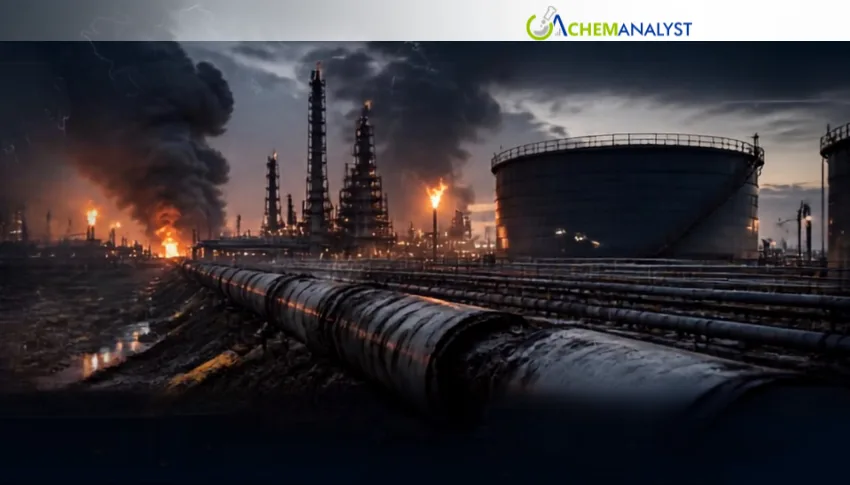
The ongoing military conflict involving Iran, Israel, and the United States has caused extensive damage to the Middle East's energy infrastructure, resulting in one of the most significant disruptions to global oil refining and petrochemical production in recent years. Over the past four months, missile and drone attacks have damaged or disrupted a large number of refining facilities across the region, affecting crude oil processing, natural gas production, and petrochemical manufacturing throughout the Gulf.
Approximately 37 to 39 critical energy facilities, including oil refineries, natural gas fields, storage terminals, and export infrastructure across nine countries, have either sustained direct damage or experienced major operational disruptions. The widespread destruction has reduced refining capacity, tightened petroleum product supplies, and raised concerns about prolonged shortages of essential petrochemical feedstocks used in manufacturing worldwide.
Kuwait remains among the hardest-hit countries, with the Mina Al-Ahmadi and Mina Abdullah refineries suffering missile and drone strikes that forced reduced processing rates while restoration work continues. Bahrain's Sitra Refinery also sustained considerable damage, particularly to its diesel hydrotreater and hydrogen production units, and is not expected to resume full operations before late 2026. In Iran, major refineries including Lavan and Bandar Abbas continue to operate at lower throughput, while expansion and modernization projects have been delayed as domestic fuel supply takes priority. Iraq's Erbil and Lanaz refineries temporarily suspended operations following drone attacks before gradually resuming production. Refineries in Israel and Qatar also continue to operate below normal capacity because of ongoing security challenges.
The Middle East, which hosts 73 active crude oil refineries, remains one of the world's most important refining regions. Saudi Arabia accounts for nearly 3.3 million barrels per day of refining capacity, making it the region's largest processor of crude oil. However, disruptions across several countries have temporarily taken an estimated 9% of global refining capacity offline. Damage to storage terminals, export facilities, pipelines, and logistics hubs, including Fujairah, has further complicated crude exports and fuel distribution to international markets.
The petrochemical sector has been severely affected by the conflict. Iran's South Pars petrochemical complex in Asaluyeh has suffered extensive damage, leaving nearly 75% of the country's petrochemical production capacity non-operational. In addition, approximately 85% of Iran's petrochemical export capability has been disrupted due to damaged infrastructure, restricted port operations, and logistical challenges.
The impact extends beyond Iran, as petrochemical complexes across the Gulf have reduced production because of feedstock shortages, infrastructure damage, and security concerns. Saudi Arabia's Sadara petrochemical complex has also experienced operational disruptions, limiting the production of several chemical intermediates. As a result, supplies of key petrochemical feedstocks such as ethylene and propylene have tightened, while the availability of polyurethane raw materials including methylene diphenyl diisocyanate (MDI) and toluene diisocyanate (TDI) has declined, affecting multiple manufacturing sectors.
Around 14 million barrels per day of regional oil output has been affected since the conflict intensified, reducing the availability of naphtha, liquefied petroleum gas (LPG), and other feedstocks essential for polymer production. Manufacturers across Asia, Europe, and North America are experiencing higher raw material costs, longer delivery schedules, and increasing supply uncertainty.
The ongoing conflict has created one of the most severe disruptions to global petrochemical supply chains in decades. Unlike previous geopolitical events that mainly affected crude oil production, the current situation has simultaneously impacted hydrocarbon extraction, refining, petrochemical manufacturing, storage infrastructure, and export logistics. As repair work on damaged facilities is expected to take several months, global energy and chemical markets are likely to remain volatile, with supply security and geopolitical developments continuing to influence prices and trade flows.
Impact on Products and Chemical Commodity Prices
The disruption of oil refineries, petrochemical plants, and export infrastructure across the Middle East is expected to tighten the availability of key petrochemical feedstocks and refined petroleum products. Products such as naphtha, LPG, ethylene, propylene, polyethylene (PE), polypropylene (PP), methanol, benzene, toluene, MDI, and TDI are likely to face supply constraints due to reduced regional production. Consequently, chemical commodities tracked by ChemAnalyst, including PE, PP, PVC, MEG, styrene, methanol, benzene, toluene, MDI, TDI, and naphtha, are expected to witness upward price pressure in the near term as supply tightens, feedstock costs increase, and global buyers seek alternative sourcing amid continued geopolitical uncertainty.






Leave a Comment
Comments (0)